


















The Quiet Build-Up Before Super Bowl Sunday
As Super Bowl Sunday approaches, the shift begins long before kickoff. Conversations turn naturally toward matchups and predictions. Highlights from the season resurface across screens, and familiar storylines start to dominate sports coverage. Even for those watching from home, the Super Bowl carries a different weight — it marks a moment on the calendar that stands apart from an ordinary game day.

Super Bowl Sunday home atmosphere
What defines this period is not action, but anticipation. There is a sense of waiting that settles in as the event draws closer, a collective awareness that something significant is coming. The game itself hasn’t started yet, but attention has already been pulled forward. In that space between now and kickoff, the Super Bowl becomes less about what happens on the field, and more about how people arrive at the day itself.
When Watching the Game Becomes an Awareness of State

athlete pre game warm up tunnel
As the Super Bowl draws closer, attention naturally shifts beyond the final score. Pre-game coverage focuses increasingly on preparation — players arriving at the stadium, warm-up routines unfolding, quiet moments of focus before the noise takes over. These scenes are familiar, yet they carry a subtle influence. They remind viewers that performance doesn’t begin at kickoff; it begins earlier, in the state a person brings into the moment.
This awareness extends beyond the athletes on screen. For fans, repeated exposure to pre-game rituals creates a quiet shift in perspective. The question stops being only who will win, and becomes how the experience itself will feel. Energy levels, focus, and alertness start to matter more. People notice whether they feel switched on or drained, present or distracted. Without planning to, they begin to recognize that the way they enter game day shapes how deeply they engage with it.
In this sense, the Super Bowl creates more than excitement — it heightens sensitivity to readiness. Not in a competitive way, but in a human one. Big events tend to do that. They sharpen awareness, turning attention inward just enough for people to ask whether they feel prepared to fully enjoy what’s coming. And once that question appears, the idea of preparation quietly takes on new meaning.
Preparation Isn’t About Training — It’s About Waking the Body Up

When professional athletes prepare for a major game, the goal is rarely to push the body harder. By the time competition week arrives, physical conditioning has already been established. What happens before kickoff is about alignment — activating muscles, regulating breathing, and bringing the body into a state that feels responsive rather than depleted. Preparation, in this context, is not about doing more, but about doing what’s necessary to feel ready.

warm up exercise indoor
That distinction matters once the idea of preparation begins to resonate beyond the field. For many people, the word still carries an association with effort, intensity, and discipline. Training suggests structure, targets, and fatigue. But leading into a major event like the Super Bowl, that mindset often feels mismatched. After long workdays, winter routines, and hours spent sitting, the body doesn’t crave another demand — it craves reconnection.
This is why preparation for fans looks fundamentally different. Instead of chasing improvement or output, the focus shifts toward activation. Light, intentional movement helps restore circulation, loosen stiffness, and reestablish a sense of momentum. Breathing becomes steadier, posture changes, and the body transitions out of its resting state. These changes may be subtle, but they significantly affect how alert and present a person feels.
Importantly, this kind of preparation doesn’t aim to create fatigue. It does the opposite. By waking the body up rather than wearing it down, movement supports sustained attention and comfort. As anticipation builds toward game day, that readiness becomes noticeable. Sitting still no longer feels heavy. Focus holds more easily. The body feels aligned with the moment ahead, not resistant to it. In this way, preparation mirrors the purpose it serves on the field — not to prove capability, but to ensure the body is ready to engage when it matters.
Turning Pre-Game Energy Into a Simple At-Home Routine

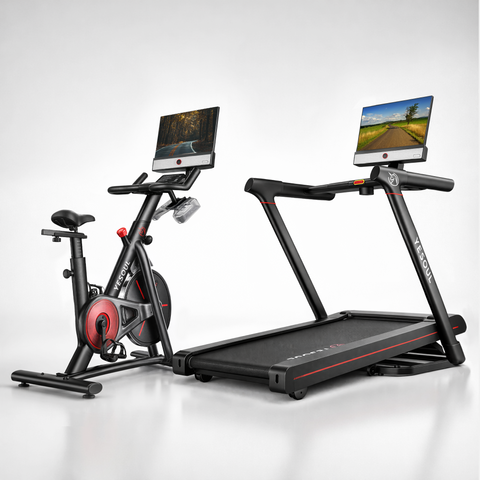
Yesoul T3S Plus treadmill workout modern living room
Once the idea of preparation shifts from training to activation, the question becomes practical: what kind of movement fits naturally into everyday life during Super Bowl week? The most effective option is often the one that requires the least negotiation. Something steady, repeatable, and easy to control — movement that creates rhythm without demanding excessive effort or planning.
This is where steady, rhythmic cardio fits naturally into the pre-game mindset. A steady run engages the body continuously, helping energy build gradually rather than in spikes. Pace can be adjusted freely, intensity can remain light, and the focus stays on flow instead of output. It mirrors the kind of preparation seen before competition — not exhausting, but grounding. For fans balancing work, family, and daily responsibilities, that simplicity makes all the difference.
Bringing that routine into the home removes even more friction. An at-home setup allows movement to happen when it feels most useful — early in the morning to set the tone, or in the evening to reset before settling in for coverage. At home, a treadmill that simply works — steady, predictable, and easy to step onto — makes movement feel less like a task and more like part of the day. Without the need to factor in weather, travel, or crowded spaces, preparation becomes easier to maintain throughout the week, turning movement into a familiar part of the build-up rather than an extra task to manage.
When Preparation Fits Seamlessly Into Everyday Life

Brandon exercises with Yesoul T3S Plus
As Super Bowl week unfolds, everyday life continues at its usual pace. Work schedules stay full, responsibilities remain, and attention shifts back and forth between daily tasks and the growing anticipation around the game. In that environment, preparation only works if it adapts to reality — not as an added obligation, but as something that fits naturally into the rhythm of the week.
This is where simplicity becomes essential. Short, steady runs provide a consistent way to create separation between different parts of the day. A brief session in the morning helps establish momentum before work begins. An evening run offers a reset after hours spent sitting, creating a clear transition before settling in to watch coverage or highlights. Because the routine happens at home, it remains flexible. There is no pressure to optimize or extend it — only to maintain continuity.

daily fitness routine at home
Over several days, these small moments of movement begin to form a pattern. Preparation becomes less about individual actions and more about rhythm. The body learns to shift more easily between focus and rest, effort and recovery. That familiarity matters as game day approaches. Instead of feeling rushed or overstimulated, the transition into Super Bowl Sunday feels smoother, supported by routines that have already aligned the body with the week’s growing energy.
In this way, preparation stops feeling separate from daily life. It becomes a quiet companion to it — a reliable bridge between everyday obligations and a major shared event. By the time Sunday arrives, readiness has already been established through repetition rather than effort, allowing attention to move fully toward the game itself without resistance or distraction.
Arriving at Super Bowl Sunday Fully Present

When Super Bowl Sunday finally arrives, the atmosphere feels different. The waiting is over, anticipation gives way to attention, and the day unfolds with a sense of occasion. From pre-game coverage to kickoff and beyond, every moment carries more weight because it has been anticipated, discussed, and built toward all week.
That’s where preparation quietly shows its value. Not in the form of performance or effort, but in presence. When the body has already moved, the mind settles more easily. Energy feels steadier, focus lasts longer, and the experience of watching the game becomes more immersive rather than passive. The rituals leading up to the day — however simple — shape how deeply the moment is felt.
The Super Bowl remains, at its core, a shared celebration of sport. But like the athletes on the field, fans also arrive at it in a certain state. When preparation becomes part of the journey, the game doesn’t just happen in front of you — it unfolds with you fully engaged. And that, more than anything, is what makes the biggest game of the year feel complete.






Leave a comment
All comments are moderated before being published.
This site is protected by hCaptcha and the hCaptcha Privacy Policy and Terms of Service apply.